




.svg)

The problem is that articles and videos online often play to two extremes.
Either they bury you in taboos, the kind where you're supposed to switch off the program the moment a certain food appears on television. Or they hand you some relaxing trick, like a drink that "cures diabetes."
The truth is that eating for type 2 diabetes isn't about perfect foods. It's about a well-arranged plate.
So this guide isn't a list of "forbidden" and "allowed." Let's take it slowly.
How foods affect diabetes: key takeaways
- Eating for diabetes isn't a list of bans. The goal is steadier blood sugar and smaller swings through the day.
- The easiest rule for most people is the plate method: half non-starchy vegetables, a quarter protein, a quarter quality carbohydrates, plus a little healthy fat.
- Non-starchy vegetables are the base because they add volume and fiber with minimal impact on glucose.
- Protein in every main meal reduces hunger and slows the carbohydrate hit.
- Fiber is your ally. It comes from legumes, whole grains, vegetables, nuts, and seeds.
- Carbohydrates aren't automatically a problem. The problem is usually the portion, the refined form, and the combination without protein or fiber.
- Fruit, like apricots, can be part of the diet. But whole fruit is a better choice than juice, and the portion is key.
- The biggest fast spike usually comes from sweetened drinks and refined carbohydrates (white bread, sweets, snacks).
- The glycemic index of foods can help as a rough guide, but it doesn't solve everything. The portion and what you eat it with often decide more than GI alone.
- The best plan is the one you can repeat every week. That means simple meals, consistent portions, and food you actually eat.
The first rule of eating with diabetes: build your plate

I'll say it again: you don't need a perfect food. You need a proven, good pattern you can repeat even when you're hungry, tired, and not in the mood to think.
That's why the plate method keeps coming up in the recommendations of serious institutions. According to the CDC, this method automatically reduces excess carbohydrate, raises fiber, and makes a meal steadier, without counting or complications.
The plate method (at its simplest)
Take an ordinary plate about 23 cm (9 inches) across. Then build it like this:
1. Half the plate: non-starchy vegetables
That's salad, broccoli, peppers, courgette, green beans, cauliflower, spinach, and the like. This food fills you up without sending your blood sugar wild.
2. A quarter of the plate: lean protein
Chicken, turkey, eggs, cottage cheese, Greek yogurt, tofu, beans, and lentils. Protein helps the meal hold fullness longer.
3. A quarter of the plate: carbohydrates, but chosen wisely
Choose the ones with more fiber: brown rice, barley, oats, wholegrain bread, legumes, a portion of fruit. Fiber is a kind of natural brake, because it slows digestion and softens the spike after eating.
Why does the plate method matter?
It matters because carbohydrates in a meal behave differently when they come with protein, fat, and fiber.
The speed at which carbohydrates end up as glucose in the blood varies. It isn't fixed. It depends on how quickly food leaves the stomach, how quickly the starch breaks down, and how quickly the glucose is absorbed in the gut. When you have protein, fat, and fiber alongside the carbohydrates, you slow the breakdown and avoid the spikes.
Here are three examples of a real-world version of the plate:
- Pan-cooked chicken plus a large salad (sauerkraut, cucumber, pepper) plus a small portion of brown rice.
- Lentil or bean stew plus salad plus a little bread, but on a plate where vegetables are half the story.
- Vegetable omelet plus cottage cheese or Greek yogurt plus a portion of fruit.
Doesn't this look like a normal person's meal? It does, and that's exactly why we need to normalise eating for diabetes and stop talking about glamorous solutions.
Do I need to count carbohydrates?
If you're on insulin (more often type 1 diabetes), counting carbohydrates often makes sense because it directly helps match your dose to the meal.
If you're not on insulin, the plate method is a great start for many people because it gives structure without the math. NIDDK (part of the NIH) says this fairly clearly:
If you don't take insulin, you may not need to count carbohydrates when you use the plate method.
In the end, there's no single perfect split of carbohydrates, protein, and fat for everyone. The "best" is whatever helps you have steadier numbers and can live with long-term.
The best foods for diabetes (by group)
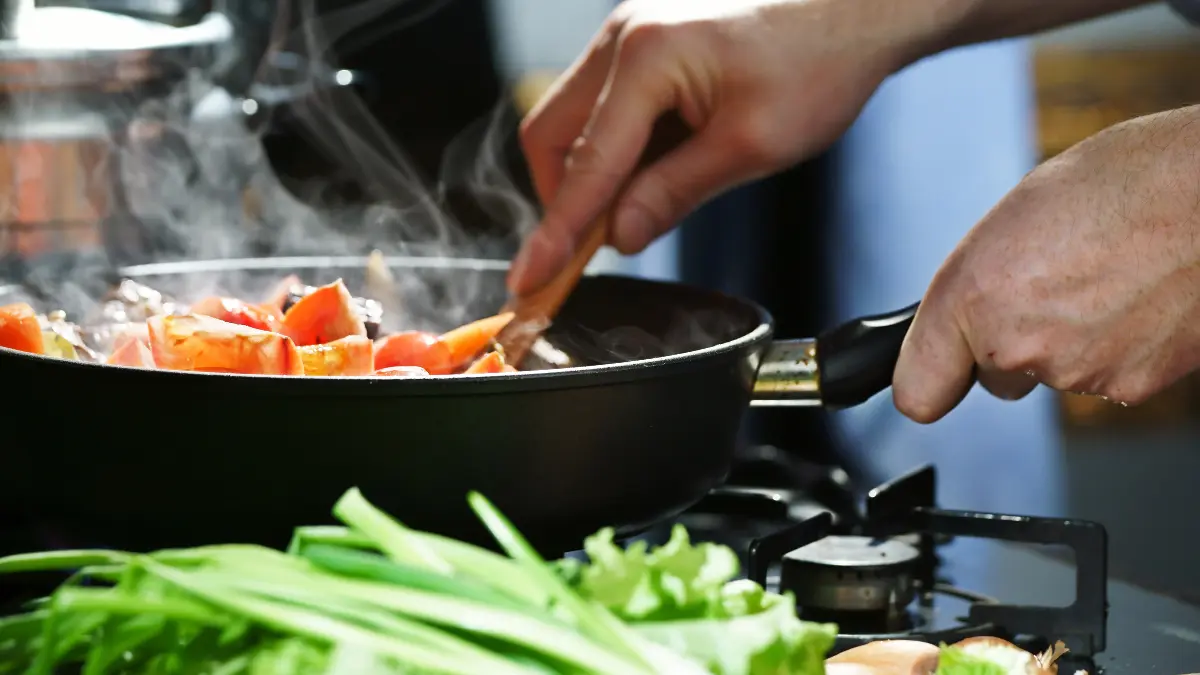
The first piece of good news is that food for diabetes doesn't have to look special. Most often it looks like a normal, home-cooked meal with a good structure. That means plenty of vegetables, solid protein, and carbohydrates in moderation, ideally with fiber.
So the goal is for the plate to look rich and varied.
1. Non-starchy vegetables (the foundation)
This is the food that gives you volume, fullness, and fiber, and usually doesn't raise blood sugar dramatically.
Examples: salad, cabbage, cucumber, tomato, pepper; courgette, aubergine, spinach, chard, broccoli, cauliflower; mushrooms, green beans.
In the CDC plate method, non-starchy vegetables are exactly what fills half the plate.
2. Proteins that steady the meal
Protein is practically the anchor of a meal. It's easier to control hunger, it's helpful for those dealing with weight and diabetes, and it's easier to keep carbohydrates within a reasonable frame.
Examples: chicken and turkey (skinless), veal in a normal portion; eggs; cottage cheese and Greek yogurt; fish (if you like, 1 to 2 times a week); legumes (count them as carbohydrates too, because they contain them).
The CDC again puts protein as a quarter of the plate, as lean protein.
3. Legumes (beans, lentils, chickpeas)
Here's something for those who love them: legumes. They give both fiber and protein. They're also kind to blood sugar precisely because they're digested more slowly.
Examples: beans, lentils, chickpeas, and even peanuts, believe it or not (a peanut is actually a legume); stews, salads with legumes, hummus (without going overboard on the oil).
Diabetes UK and the ADA generally push more plant sources and fiber, and legumes are top of that list.
4. Carbohydrates (thoughtfully)
One sentence is key here. Carbohydrates aren't automatically a problem, the problem is usually the form and the portion.
Better choices: oats, barley, wholegrain bread, whole grains, wholegrain pasta; potato in a smaller portion, sweet potato and even purple sweet potato are a better option, better when it's alongside protein and vegetables; a portion of fruit (not juice).
The plate method literally teaches that carbohydrates go in a quarter of the plate, not as the main character.
5. Fruit, yes, but wisely
Fruit is fine, but whole fruit is a different story from juice. Juice is drunk quickly and blood sugar goes up faster. The CDC gives exactly this example.
Practical examples: apple, pear, orange, berries; a portion alongside yogurt or a handful of nuts, for stability.
6. Fats that help (in small amounts)
For diabetes the heart is a big topic, which is why the swap of saturated fats for unsaturated ones is stressed so often.
Better choices: olive oil, canola (rapeseed) oil; nuts and seeds in a portion (chia seeds, for example, are good for diabetes).
Foods to limit or be careful with

The trick here is in the nuance: many things aren't forbidden, but they're problematic because you easily overdo them, they raise blood sugar fast, or over the long term they worsen your lipids and heart risk.
1. Sweetened drinks and juices
This is the fastest route to a blood sugar spike. And it's often underestimated because "it's only a drink." The CDC specifically notes that juice raises blood sugar faster than whole fruit.
2. Refined carbohydrates
White bread, white rice, pastries, biscuits, sweets. Not because they're "evil," but because they're easily digested and easy to overeat.
The CDC recommends fewer refined grains and less added sugar in a meal plan.
3. Fried and breaded food
This is usually a combination: a lot of fat plus often flour or breadcrumbs plus a large portion. That's a recipe for a lot of calories and often a worse fat profile.
But this doesn't mean you can't fry anything, as many people assume. Frying isn't automatically bad, and chicken fried in a little butter with broccoli and quinoa can be perfectly fine for blood sugar. You've got protein and vegetables, plus healthy carbohydrates.
From my experience, a lot of my clients take the liberty of reading this the wrong way, so let me be precise.
What's OK is:
- A little butter, skinless chicken, plenty of vegetables, no breading. This is mostly fine, especially if you use the butter "for flavour," not as half the pan. In that case it's more a question of your total saturated fat across the day.
- A lot of butter, plus cream or full-fat cheese in the sauce. Here saturated fat piles up fast, and this is where people unknowingly cross the line. Saturated fat doesn't raise blood sugar directly the way juice does, but it can worsen LDL cholesterol, and with diabetes, heart care is part of the same story.
- Breaded chicken or frying in a lot of fat, with bread or potato as a large portion. Here several problematic things add up at once, and the meal easily becomes both high-calorie and glycemically stronger.
If you want the flavour of butter, make a compromise. Try frying mostly in olive or rapeseed oil, and add a small piece of butter near the end just for the aroma.
Diabetes UK and the ADA both push that swap as smarter for the heart.
4. Processed meat and "heavier" meat options
Sausages, salami, bacon, burgers often come with more saturated fat and salt. For diabetes, the explicit advice is to cut down on processed meat and choose leaner sources.
5. Too much saturated fat across the day
This includes butter, ghee, full-fat cheeses, cream, and fatty cuts of meat. Saturated fat can raise LDL cholesterol and with it cardiovascular risk, and with diabetes that risk is already higher.
The AHA gives a very concrete frame:
Aim for less than 6% of calories from saturated fat, which is about 13 g a day on a 2000 kcal diet.
Frequently asked questions about food for diabetes
Can I eat bread if I have diabetes?
Yes, but the difference is in the type and portion. More often choose bread with more fiber and eat it as part of a meal (with protein and vegetables). Don't eat it on its own, because by itself it raises blood sugar too much.
Can I eat rice, pasta, and potato?
You can, but in a smaller portion and more often in the "better" versions (wholegrain, boiled or baked, more fiber). The simplest rule is for starchy carbohydrates to be about a quarter of the plate, with vegetables and protein filling the rest.
Is fruit forbidden with diabetes?
No. Whole fruit is generally fine, and the key is portion and frequency, especially if you eat it with a meal or alongside yogurt or nuts.
Is fruit juice the same as fruit?
No. Juice breaks down much faster because it has no fiber, and it's easy to drink more than you would eat as fruit, so blood sugar more often rises faster and higher.
Do I need to cut out sugar 100%?
In practice it's more important to reduce added sugars and "liquid sugar" (sweetened drinks) than to chase perfection. Focusing on the overall eating pattern and portions usually gives a better result than a rigid ban on everything sweet.
Do I need to count carbohydrates, or is the plate method enough?
If you're on insulin, counting carbohydrates often makes sense because it helps match your dose to your meal. If you're not on insulin, the plate method is a great, simple start for many people, without the math.
Is keto or very low carb necessary for type 2 diabetes?
There's no single ideal carbohydrate percentage for everyone. Some people benefit from a moderate reduction in carbohydrates, but the most important thing is that the plan is sustainable and fits your treatment and goals.
Can I eat "sugar-free" products and artificial sweeteners?
They can be fine in moderate amounts, but "sugar-free" doesn't automatically mean "calorie-free" or "healthy." With sugar alcohols (for example sorbitol, xylitol), watch out for both digestive upset and the total amount.
Is honey better than sugar if I have diabetes?
Honey is still sugar from the perspective of glucose and portion. If you use it, treat it as a sweet extra, in a small amount, and better with a meal than on an empty stomach.
Can I fry chicken in butter if I eat it with vegetables?
That isn't automatically a bad meal for blood sugar, because you have protein and vegetables. The nuance is that butter carries more saturated fat, so it's smart to keep the amount small or more often choose olive or rapeseed oil, especially if your LDL is high.
Can I drink alcohol if I have diabetes?
You can, but with caution. The biggest risk is hypoglycemia, especially if you're on insulin or certain medications, and especially if you drink on an empty stomach. Alcohol is safer with a meal and with blood sugar monitoring, and not as a replacement for a meal.
Is intermittent fasting or skipping meals safe with diabetes?
It can be workable for some people, but it isn't for everyone, and it depends on your treatment, especially if you're on insulin or medication that can lower blood sugar. If you skip meals, the risk of hypoglycemia rises, so it's smart to do it in consultation with your doctor and with more frequent monitoring.
Conclusion: Is eating for diabetes really that complicated?
Food for diabetes isn't a list of bans. It's most often a few smart habits repeated often enough that your blood sugar is calmer, and you're calmer with it.
If you want the simplest possible rule: build your plate. Let half be non-starchy vegetables, a quarter protein, and a quarter carbohydrates you can control. Within that frame, even "normal" food like bread, rice, or potato can be perfectly fine, only the portion and the combination decide whether the meal will be steady or your blood sugar will go haywire.
And one more important nuance: "fried" and "over-fried" aren't the same thing. Pan-cooked chicken with a little fat and plenty of vegetables isn't the same story as breaded and fast-food versions. Diabetes isn't ruined by one pat of butter, but by the habit of most meals being heavy, refined, and fiber-poor.
Recommended reading on diabetes
For more on the topic of diabetes, feel free to click through:


