





.svg)

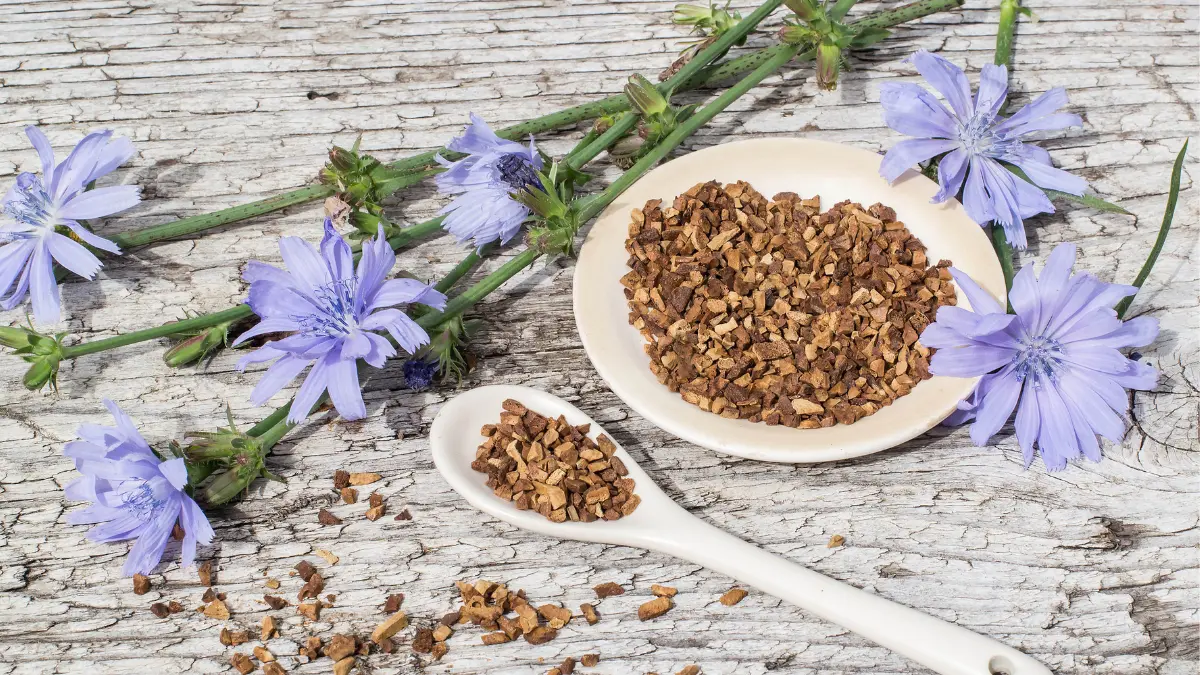
Chicory (Cichorium intybus) is the plant behind radicchio, endive, and the roasted root that gets brewed as a coffee substitute.
It's also one of the foods people with diabetes ask about alot. Is the plant, and the drink made from its root, a good choice when you're managing blood sugar?
Below is what we know with reasonable confidence about chicory and diabetes, based on recent scientific sources. We'll also look at how chicory might fit into your eating plan if you have diabetes.
🌿 Chicory and diabetes: quick summary
- Chicory root and leaves have an extremely low glycemic index and minimal effect on blood glucose. The root contains a lot of inulin (a dietary fiber) and very little sugar, so it practically never causes sudden glucose spikes.
- Chicory inulin helps with blood sugar control. As an indigestible carbohydrate, inulin slows glucose absorption and produces only a fraction of the glycemic response of pure glucose. Studies show inulin supplements can lower blood sugar, improve insulin sensitivity, and reduce inflammatory processes in the body.
- Chicory coffee is popular among people with diabetes as a substitute for regular coffee. It contains no caffeine and almost no carbohydrates on its own, which means it usually won't raise blood sugar.
- Some research supports the benefits. In one clinical trial, women with type 2 diabetes who took 10 g of chicory inulin daily for two months had lower fasting glucose and HbA1c, along with improved liver enzymes. That suggests chicory may help with better long-term glycemic control.
- Chicory supports liver health and metabolism. It has long been called a liver plant, and a healthy liver matters for blood glucose regulation. Animal and human research shows chicory may reduce oxidative stress in the liver and inflammatory processes linked to diabetes, contributing indirectly to better blood sugar regulation.
- Chicory fiber helps digestion and may reduce sugar cravings. Inulin acts as a prebiotic. It feeds beneficial gut bacteria that produce useful compounds like short-chain fatty acids, which improve glucose metabolism. Many people also notice chicory reduces appetite and the desire for sweets, making calorie and sugar intake easier to control.
- Chicory is easy to work into a diet plan, because it adds almost no carbohydrate load to a meal. A cup of chicory drink with a splash of milk has negligible carbohydrates and calories. Chicory as a vegetable, like radicchio, is also safe. It's rich in vitamins and fiber, and low in sugar.
- Moderation and a gradual introduction are key. Chicory is healthy, but taking too much inulin at once can cause bloating or cramps in sensitive people.
This article is informational only and doesn't constitute medical advice. If you have diabetes, speak with a doctor or nutritionist who knows your health situation before making dietary changes.
How chicory affects blood sugar

Chicory root is rich in inulin, a soluble fiber that is essentially not digested, and very poor in true sugars. Because of this, just like celery, plain chicory has a very low glycemic effect and doesn't cause sudden blood sugar spikes on its own.
A 2024 review published in Nutrients found that inulin supplementation reduces blood glucose, improves insulin sensitivity, and lowers inflammation markers, while also supporting body weight and BMI control.
Those effects arise mostly through the gut microbiota. Inulin feeds beneficial bacteria that produce short-chain fatty acids, and those in turn improve glucose metabolism and reduce inflammation. The Nutrients review traces the effect specifically to Bifidobacterium and Anaerostipes, the SCFA-producing genera that inulin selectively favours.
A meta-analysis of nine randomised trials in people with type 2 diabetes backs this up with harder numbers. Inulin supplementation significantly improved fasting plasma glucose, HbA1c, and HOMA-IR, with the effects strongest when supplementation ran for eight weeks or longer.
In practice, this means a cup of unsweetened chicory coffee, or a dish where part of the sugar or flour is replaced with inulin, will have a considerably milder effect on blood sugar than the standard version.
The combination is what matters, though. If you sweeten a chicory drink with sugar or honey, the glycemic effect comes right back from the sweetener rather than the chicory.
Diabetes, the liver, and the pancreas

When we talk about diabetes, we usually look only at blood sugar.
The liver and pancreas play a central role, though. The liver stores and releases glucose, and the pancreas secretes insulin. If these organs are strained or damaged, by fatty liver or chronic inflammation for instance, regulating blood sugar becomes harder still.
Chicory is traditionally a liver plant, and newer research goes some way toward supporting that reputation. A 2024 review in Scientia Pharmaceutica describes several antidiabetic and hepatoprotective effects of chicory, from lowering glucose and lipids to protecting liver tissue in preclinical models.
In animal studies, chicory extract and root inulin lower blood sugar. Some researchers argue on this basis that it's a natural remedy for triglycerides and cholesterol, and that it eases liver damage and the inflammatory signals tied to metabolic syndrome and fatty liver.
In mice with non-alcoholic fatty liver disease, adding inulin reduced fat accumulation in the liver, improved liver enzymes, and normalised a range of metabolic markers associated with insulin resistance.
Animal studies are just that, of course. They don't serve as proof that something works in people.
What the human trials show
Human data is thinner, but there are encouraging findings.
In one randomised placebo-controlled trial, 46 women with type 2 diabetes took roughly 10 g of chicory inulin daily for two months. Researchers recorded significant reductions in fasting serum glucose, HbA1c, and two liver enzymes (AST and ALP), which points to improvements in both glycemic control and liver function.
For people with diabetes, this means chicory can be a useful ally working in the background. There still isn't enough evidence to guarantee anything.
Is chicory a good idea if you have diabetes?
Yes, for most people with diabetes, chicory is a very good choice.
It doesn't meaningfully raise blood sugar, it supports digestive health, and it may help with factors like insulin sensitivity and weight control.
The thing to understand is that chicory isn't a treatment for diabetes. It's a useful addition alongside your medication, a balanced diet, and movement.
If you're swapping sweetened drinks for chicory coffee, or adding more radicchio and inulin to your diet, it's worth tracking your blood sugar and adjusting your medication if needed, in consultation with your doctor.
In practice, for most people with diabetes, chicory brings more benefit than risk.
More foods I've investigated for diabetes
If this was useful, I've researched other foods the same way, digging through the studies and pulling out what actually helps in practice:
- Apricots and diabetes
- Is sauerkraut good for diabetics?
- Is celery good for diabetics?
- Sweet potato and diabetes
- Cinnamon and yoghurt for diabetics
Have a food that keeps showing up in diabetes advice and you're not sure whether it holds up? Tell me and we'll break it down the same way.
Frequently asked questions about chicory and diabetes
Is chicory good for diabetes?
Yes, chicory can be a good choice for people with diabetes. It has a very low glycemic effect, little sugar, and contains inulin, a soluble fiber that may help steady blood sugar. Chicory isn't a treatment for diabetes, though. It's a useful dietary addition alongside medication, movement, and balanced meals.
Does chicory raise blood sugar?
Plain chicory usually doesn't raise blood sugar meaningfully. Chicory root has very few available carbohydrates, and a large share of them is inulin, a fiber that isn't digested like ordinary sugar. Problems arise if the chicory drink is sweetened with sugar, honey, or syrup, because then the glycemic effect comes from the sweetener.
What is chicory inulin?
Inulin is a soluble dietary fiber found naturally in chicory root. It isn't digested like a standard carbohydrate. Instead it reaches the gut, where it feeds beneficial bacteria. This is why it can act as a prebiotic, support the gut microbiota, and have a favourable effect on glucose, insulin sensitivity, and satiety.
Can inulin help with blood sugar?
Inulin can help steady blood sugar, particularly when it replaces some of the sugar or refined carbohydrates in the diet. A meta-analysis of nine randomised trials in people with type 2 diabetes found inulin supplementation significantly improved fasting glucose, HbA1c, and insulin resistance, with the effect strongest at eight weeks or longer. The result still depends on dose, the overall diet, and individual response.
Is chicory coffee good for diabetics?
Chicory coffee can be a good substitute for regular coffee or sweetened drinks, especially because it contains no caffeine and very few carbohydrates. On its own it usually doesn't raise blood sugar. It's best drunk unsweetened, or with a little milk, without sugar, honey, or sweet syrups.
Does chicory contain caffeine?
No, chicory naturally contains no caffeine. This is why a drink made from roasted chicory root appeals to people who want a coffee-like flavour without the stimulant effect. It can be useful in the evening, or for people who tolerate coffee badly and experience jitters, palpitations, or sleep problems.
Can chicory lower HbA1c?
Some research with chicory inulin shows improvements in fasting glucose and HbA1c in people with type 2 diabetes, and a meta-analysis of nine trials found a significant pooled reduction. That doesn't mean chicory alone will reliably lower HbA1c in every person. It's best viewed as additional support rather than a replacement for medication, diet, and blood sugar monitoring.
Is chicory good for gut health?
Yes, chicory can be good for the gut because it's rich in inulin, a prebiotic fiber that feeds beneficial gut bacteria. A healthy gut microbiota can support digestion, satiety, and glucose metabolism. In sensitive people, though, too much inulin at once can cause bloating, gas, or cramps.
Can chicory help with sugar cravings?
Chicory can help indirectly, mostly through fiber, satiety, and by substituting for sweet drinks. If a cup of unsweetened chicory replaces a sugary coffee, juice, or dessert drink, total sugar and calorie intake can drop. Inulin may also support satiety, but don't expect it to remove sugar cravings on its own.
Is chicory good for the liver?
Chicory is traditionally described as a liver plant, and some research suggests chicory extracts and inulin may act favourably on liver enzymes, oxidative stress, and fatty liver. One trial in women with type 2 diabetes found reductions in AST and ALP after two months of chicory inulin. Human evidence still isn't strong enough for big claims. In liver disease, chicory can be an addition, not a therapy.
Can people with diabetes eat radicchio?
Yes, radicchio and chicory leaves can be an excellent choice for people with diabetes. They're low in calories and sugar, high in fiber, and their bitter flavour pairs well with salads, olive oil, lemon, walnuts, eggs, or fish. As a non-starchy vegetable, radicchio fits easily into meals aimed at steadier blood sugar.
How much chicory a day is enough?
If you drink chicory coffee, one to two cups a day is a reasonable amount for most people. If you use chicory inulin as a supplement, start with a small dose and increase gradually, because a sudden larger amount can cause bloating. With diabetes, the best approach is to track your own blood sugar response.
Who should be careful with chicory?
Caution is needed for people with sensitive digestion, irritable bowel syndrome, significant bloating, an allergy to plants in the daisy family, or gallbladder problems. Inulin can cause gas and cramps if introduced too quickly. People with diabetes who take medication should monitor their blood sugar and discuss larger changes with their doctor.
What is the bottom line on chicory and diabetes?
Chicory is a good choice for people with diabetes because it has a low glycemic effect, contains no caffeine, is rich in inulin, and may support digestion, satiety, and steadier blood sugar. It works best as part of a balanced diet, especially when it replaces sweetened drinks or refined carbohydrates, but it isn't a substitute for medication.


