





.svg)

Celery is one of those foods that sneaks onto every healthy list. A bit in the salad, a bit in the soup, a bit in the smoothie.
With diabetes, though, every food raises the same question straight away: can celery actually help?
In this article I'll break down celery and diabetes in a simple but rigorous way. We'll look at what the research says, how celery affects blood sugar, and in what amounts and forms it makes sense to eat if you're watching your glucose.
Key takeaways
- Celery is not off-limits for people with diabetes. Because of its very low sugar and carbohydrate content, it's considered a free food.
- Low glycemic index. Celery has a very low GI (roughly 15) and a negligible glycemic load. It barely causes a blood sugar spike. For comparison, white bread has a GI above 70.
- Minimal impact on glucose. Thanks to its high water content (around 95%) and its fiber, celery digests slowly, so sharp glucose rises are unlikely.
- It may help with blood sugar control. Preliminary research suggests the phytochemicals in celery (such as apigenin and luteolin) may improve insulin sensitivity and reduce inflammation.
- Rich in fiber and nutrients. One fresh stalk contains under 1 g of natural sugar, roughly 0.5 to 0.7 g of fiber (3% of daily needs), and only about 6 kcal, while providing vitamins A, C, and K. The fiber slows glucose absorption and adds to satiety.
- Nutritional advantages. Celery supplies potassium (around 260 mg per cup), which supports blood pressure regulation, important for many people with diabetes. It also contains antioxidants (vitamin C, beta-carotene, apigenin) that protect cells from oxidative stress and inflammation.
- Best raw or lightly cooked. Fresh celery is the most favourable for glycemia, keeping all its fiber and the lowest GI. Cooked celery is still good (slightly more digestible, but most fiber remains). Celery juice is less useful for blood sugar control, because removing the fiber raises the glycemic effect.
- Combine for satiety. Pair celery with protein and healthy fats. Celery sticks with almond butter or hummus, for example. The added fat and protein slow the absorption of the small amount of carbohydrate celery contains.
- Portions and measuring. Unlike fruit, the portion here isn't strictly limited. You can eat it fairly freely. A standard serving of a non-starchy vegetable like celery is about 1 cup chopped (roughly 100 g), containing only around 3 g of carbohydrate. Even 2 to 3 cups a day fits comfortably into a diabetes eating plan.
This article is informational and doesn't replace advice from your doctor or nutritionist. If you have diabetes or take medication, always speak to a professional before making big changes to your diet.
Celery and blood sugar: GI, fiber, and nutritional advantages
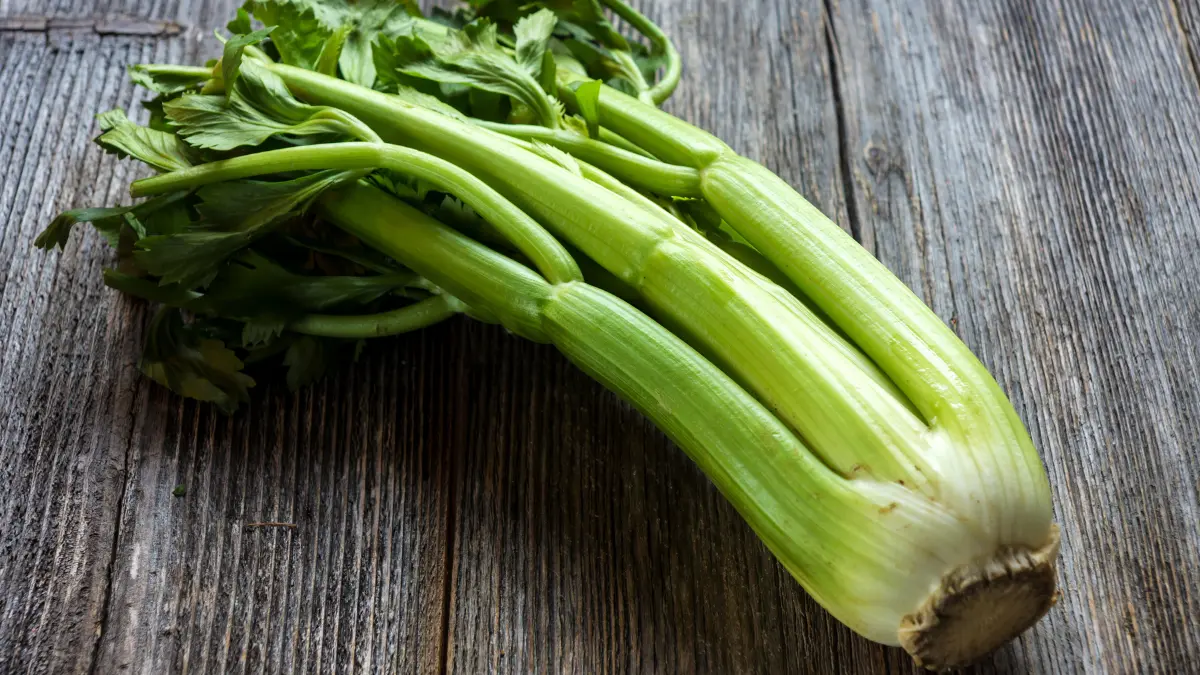
The main reason celery is considered a friend to people with diabetes is its low glycemic index and its high water and fiber content.
Fresh celery has an estimated GI of around 15 per 100 g serving, placing it among the very lowest GI foods.
In other words, the glucose from celery enters the blood slowly and in small quantities.
For comparison, foods like white bread or boiled potato have a GI above 70 and cause a much faster rise in blood sugar. Apricots, also often related to diabetes, have a GI of 34 for instance.
Celery practically doesn't trigger sudden glucose spikes. I sometimes joke that you burn nearly as many calories chewing celery as you get from it.
Joking aside, here are the things that actually matter.
Fiber in celery slows absorption
There are roughly 1.5 to 2 g of dietary fiber in 100 grams of celery. That isn't a huge number, but almost all the carbohydrate in celery arrives packaged with fiber that slows digestion.
Glucose from celery is therefore released gradually into the bloodstream. Harvard's Nutrition Source notes that people who eat enough fiber have a significantly lower incidence of heart disease and type 2 diabetes.
Fiber from celery and other vegetables helps keep glucose steadier and, much like cardio training, protects cardiovascular health.
Minimal sugar and calories
Celery contains negligible amounts of natural sugars, mostly glucose and fructose. One stalk (around 40 g) has less than 1 gram of sugar.
That amount won't meaningfully affect glycemia, particularly since it comes alongside fiber and water.
Celery is also extremely low in calories, at around 16 kcal per 100 g. That makes it ideal for anyone trying to lose weight or maintain a healthy weight alongside diabetes.
Weight control matters here, because losing excess weight helps improve blood sugar regulation in type 2 diabetes.
Vitamins, minerals, and antioxidants
Light as it is, celery still delivers useful micronutrients. It's a particularly good source of vitamin K (important for blood clotting and bone metabolism) and potassium.
One cup of chopped celery (about 100 g) contains around 260 mg of potassium, which contributes to blood pressure regulation. This matters for the many people with diabetes who also manage hypertension.
On the antioxidant side, there's vitamin C, beta-carotene (provitamin A), and flavonoids like apigenin. Apigenin is a phytochemical that animal research has shown to have antidiabetic properties.
In high-fat-diet mice, for instance, apigenin lowered fasting blood glucose, plasma insulin, and HOMA-IR, a measure of insulin resistance. A systematic review of apigenin and metabolic syndrome collects similar findings across animal models. The antioxidants in celery also help reduce inflammatory processes in the body, useful because chronic inflammation is linked to insulin resistance and diabetes complications.
For all these reasons, celery behaves almost neutrally, or even mildly favourably, on glucose levels.
Some research suggests an active hypoglycemic effect. In one small study, celery leaf extract (250 mg, three times daily) given to 16 elderly people with prediabetes over 12 days significantly lowered both fasting and post-meal glucose.
Interestingly, the drop in blood sugar wasn't accompanied by a rise in insulin, which implies that cells became more sensitive to insulin, or that other components of the plant influenced glucose metabolism.
More research on larger samples is needed. Still, these results hint that celery might be more than neutral, and potentially useful for blood sugar control.
Can diabetics eat celery in every form? Raw, cooked, or juiced

Always choose firm, fresh stalks of a deep green colour.
The way you eat celery affects how well you benefit from it and how it acts on your blood sugar. Let's look at the different forms.
Fresh celery, the best everyday choice
Raw celery is ideal for people with diabetes. It's nourishing, refreshingly crunchy, and filling.
As noted, in its raw form it retains the maximum amount of fiber and water. That means glucose from it enters the bloodstream slowly. Raw celery also demands thorough chewing. Eating and chewing more slowly can help you process food better and feel full sooner.
A practical tip. Wash the fresh stalks, trim the base and the leafy tops, then cut into sticks. Store the prepared celery in the fridge (in a container with a little water, or wrapped in a damp paper towel) to keep it crisp.
Celery sticks are excellent for snacking between meals instead of calorie-dense alternatives. You can also dip them in healthy spreads: hummus, avocado spread, or a little peanut butter. That adds protein and healthy fats alongside the celery, making the snack nutritionally more complete and releasing glucose even more slowly.
The American Diabetes Association's plate method recommends filling half the plate with non-starchy vegetables like celery.
Cooked celery keeps the benefits, in moderation
Celery is often used in cooked dishes, from soups and stews to sautéed vegetable mixes.
Cooked celery is still nutritionally useful for people with diabetes, though it's worth knowing that heat causes mild changes.
First, some heat-sensitive vitamins (like vitamin C) can be lost in cooking. High temperature also softens the cellulose fibers, so celery becomes easier to chew and digests faster than raw.
This can slightly raise its glycemic index, though it stays in the low range. Raw celery sits at a GI of about 15, while some sources put cooked celery around 30, which is still low.
The good news is that most minerals and vitamin K survive cooking. Potassium, which celery has in decent quantity, leaches into the liquid if you cook celery in soup, but that liquid is usually consumed, so the minerals aren't lost.
Celery soup can be an excellent way to get fiber and nutrients with minimal calories. Even cooked celery pieces in a stew will contribute to fullness.
A tip. When cooking celery in soup, try not to overcook it into mush. It's better added near the end of cooking so it stays slightly firm. That preserves more of the fiber structure.
Celery juice, a trend to approach carefully
Drinking celery juice, often blended with other fruits and vegetables, has become popular in recent years. For people with diabetes, there are a few things to watch.
Celery juice keeps the vitamins and antioxidants, but loses practically all the fiber that makes celery so good for stabilising blood sugar.
Once you remove the fiber, the sugars from the vegetable (small as they are) get absorbed faster. The total sugar in a glass of celery juice still isn't high (a glass of pure juice might have around 3 to 5 g of natural sugars, depending on how many stalks were used), but the glycemic effect will be quicker than if you'd eaten the celery whole.
This same principle is why I have a problem with detox waters for weight loss. It's more marketing wrapper than anything useful.
None of this means someone with diabetes can't drink celery juice. Just treat it as a beverage rather than a replacement for a meal or for vegetables.
Celeriac, a swap for starchy sides
While we're on celery, celeriac (celery root) deserves a mention. It's the bulbous root of the celery plant, and a considerably starchier part than the green stalks.
Celeriac is used more like potato or carrot. It can be boiled, roasted, or mashed.
For people with diabetes, celeriac is a better alternative to potato. It has roughly half the carbohydrate of potato, around 9 to 14 g per 100 g depending on whether it's raw or cooked, and a lower glycemic index (around 35), which puts it in the low-GI category. On that basis I'd say it's even better than sweet potato for diabetes.
That means celeriac mash or roasted celeriac won't raise blood sugar as sharply as the same portion of potato. Celeriac is also rich in fiber (about 2.5 to 3 g per 100 g), extremely rich in vitamin K, and contains a good amount of potassium and some vitamin C.
One cup of cooked celeriac (roughly 156 g) has about 66 kcal, half the calories of a cup of boiled potato. All of which makes celery root a desirable swap for starchy sides.
How to prepare it. Raw celeriac is hard and has a strong, slightly nutty flavour. Peel the thick skin, cut it up, and steam or boil until soft. Then mash it with a little olive oil, garlic, and seasoning. You get a tasty purée similar to mashed potato, with fewer carbs and a lower GI.
You can also roast it in the oven, cut into cubes or slices, seasoned with olive oil, thyme, and pepper.
One caveat: celeriac still contains a meaningful amount of carbohydrate, so count it when you're counting the carbs in a meal. Given the lower glycemic response, though, your body will react more steadily to it.
Combining celery with other foods for stable blood sugar
Celery is rarely eaten entirely on its own, and it shouldn't be. Smart combinations let you build meals and snacks that keep a low glycemic effect and taste better.
Celery and protein. Dipping celery into a protein-rich spread like hummus (chickpeas supply protein and fiber) or low-fat cottage cheese gives good balance. This kind of snack has very little available carbohydrate, and the protein will fill you up. Another idea is a tuna or chicken salad made with Greek yogurt and diced celery.
Celery and healthy fats. Celery sticks spread with a little peanut or almond butter are a classic. You get healthy fat, some protein, and a lot of satiety, while the total glycemic load stays minimal. Fat slows gastric emptying, so even the small amount of sugar from celery is released more slowly. Just watch the quantity of nut butter.
Celery in cooked dishes. If you're making a stew or a casserole, add plenty of celery alongside carrot, pepper, and onion. That dilutes the carbohydrate from the carrot or potato, and increases the fiber and volume of the dish. On the plate, try always serving a portion of vegetables like celery, broccoli, or salad alongside your main carbohydrate source (rice, pasta, or bread).
Fermented celery. A curiosity worth trying: celery stalks can be pickled, much like cucumbers. Pickled celery retains most of its nutrients, gains a tangy flavour, and adding apple cider vinegar further lowers the glycemic index of the meal. Use it as a sharp salad or as a sandwich topping in place of sweetened pickles.
Celery is a generous ingredient. Its neutral flavour lets you pair it with almost anything. Cheese, walnuts, yogurt, lean meat, other vegetables: celery will add fiber and volume without disturbing your glucose goals.
How much celery is safe to eat?
In numbers, one vegetable serving is counted as roughly 15 g of carbohydrate. To get that much carbohydrate from celery, you'd need to eat about 5 cups of raw celery, over 500 g.
You're unlikely to eat that much in one sitting.
Variety is still the recommendation, of course, so there's no need to eat enormous quantities of the same food every day. Include celery as part of a colourful vegetable spectrum.
Type 1 diabetes
For people on insulin, any food can theoretically call for a dose, though celery has so little impact that it usually isn't counted. If you're snacking on a few stalks, you probably don't need to cover it with insulin. But if you were to eat a genuinely large amount, say a full bowl of celery with hummus as a snack, it's worth checking your blood sugar afterwards.
Good practice: assess how your own body responds. Measure your glucose before and roughly 2 hours after a celery-based snack. Most likely there won't be a meaningful difference.
Type 2 diabetes
Here celery really can be considered an ally, because there's no concern about excessive glycemic intake. Pay more attention to the other components of the meal.
So, is celery good for diabetics?
Celery is a strong choice for people with diabetes. It has a low glycemic index, few carbohydrates, few calories, and plenty of water and fiber. It won't treat diabetes on its own, but it fits neatly into an eating pattern aimed at steadier blood sugar, better satiety, and lower calorie intake.
It's most useful when it replaces something else: a calorie-dense snack, or a starchy side.
If you want more on this topic, I have other diabetes articles on the BlissFit blog, where I work through the research and pull out what actually helps in practice.
Frequently asked questions about celery and diabetes
Can diabetics eat celery?
Yes, people with diabetes can eat celery. It's a non-starchy vegetable with very few carbohydrates, little natural sugar, and a lot of water. Because of this it has minimal impact on blood sugar. In practice it can be eaten fairly freely, especially raw, as part of salads, snacks, soups, or stews.
Is celery good for diabetics?
Celery can be a good choice for diabetics because it has a low glycemic index, very few calories, and some fiber. It won't cure diabetes on its own, but it fits well into a diet aimed at steadier blood sugar, better satiety, and lower calorie intake. It's most useful when it replaces calorie-dense snacks or starchy sides.
What is the glycemic index of celery?
Celery has a very low glycemic index, roughly 15 when raw. That means the carbohydrates in celery convert to glucose very slowly and in small amounts. As a result, celery barely triggers sudden blood sugar spikes, particularly when eaten as part of a meal with protein and healthy fats.
How many carbs are in celery?
Celery has very few carbohydrates. About 100 g of celery contains roughly 3 g of carbohydrate, along with a high proportion of water and fiber. One celery stalk has less than 1 g of natural sugar and very few calories. This is why celery isn't usually treated as a problem food in diabetes.
Does celery raise blood sugar?
Celery has very little effect on blood sugar. Because of its low carbohydrate content and high water and fiber content, glucose from celery is released slowly and in small amounts. If you eat it with hummus, cottage cheese, eggs, tuna, or nut butter, the glycemic effect is steadier still.
Is raw celery better than cooked?
Raw celery is the best choice if you want to retain the most fiber, water, and crunch. Cooked celery is still good, though heat can soften the fiber slightly and reduce some of the vitamin C. In soups, stews, and vegetable dishes, cooked celery remains a useful, low-calorie food with a low glycemic effect.
Is celery juice good for diabetes?
Celery juice isn't as useful as whole celery, because juicing removes most of the fiber. Although pure celery juice still doesn't contain much sugar, the glucose can be absorbed faster than when you eat a whole stalk. Treat it as an occasional drink rather than a substitute for vegetables.
Is celeriac good for diabetes?
Celeriac (celery root) can be a good substitute for potato because it has fewer carbohydrates, fewer calories, and a lower glycemic index. It still contains a certain amount of carbohydrate, so count it in your meal, but it usually produces a steadier glycemic response than potato. It can be boiled, roasted, or mashed.
How much celery can I eat a day?
For most people with diabetes, one to three cups of chopped celery a day fits into the diet without any problem. Celery has so few carbohydrates that you'd need to eat a very large amount for it to meaningfully affect blood sugar. Even so, it's best eaten as part of a varied diet, not as your only vegetable every day.
What should I combine celery with for stable blood sugar?
Celery is best combined with protein and healthy fats. Good examples are celery with hummus, Greek yogurt, cottage cheese, tuna, chicken, eggs, avocado, or a little peanut butter. These combinations improve satiety, slow digestion, and help keep blood sugar steadier.
Is celery good for weight loss with diabetes?
Yes, celery can help indirectly because it has very few calories, a lot of water, and adds volume to a meal. It can replace calorie-dense snacks and make it easier to stick to an eating plan. Celery on its own doesn't cause weight loss, though. In type 2 diabetes, the biggest effect on weight and blood sugar comes from an overall calorie deficit and consistency.
Can celery improve insulin sensitivity?
Some preliminary research suggests compounds in celery, such as apigenin and luteolin, may have a favourable effect on inflammation, glucose, and insulin sensitivity. That evidence isn't strong enough yet to treat celery as a therapy. It's best seen as a useful part of an overall dietary pattern.
Do people with type 1 diabetes need to count celery?
In most cases, small amounts of celery don't require specific carb counting, because their effect on glucose is minimal. Even so, with type 1 diabetes it's best to track your own response, particularly if you're eating a large quantity of celery with hummus, spreads, or other additions that carry more carbohydrate or calories.
Who should be careful with celery?
Most people tolerate celery well, but caution is warranted for anyone with a celery allergy, a sensitive digestive system, or anyone consuming very large amounts of celery juice. If you have diabetes, take medication, or plan major dietary changes, it's best to monitor your blood sugar and consult your doctor or nutritionist as needed.
What's the bottom line on celery and diabetes?
Celery is a very good choice for people with diabetes because it has a low glycemic index, few carbohydrates, few calories, and plenty of water. It's best eaten raw or lightly cooked, combined with protein and healthy fats. Celery juice is less useful than the whole food, and celeriac can be a good substitute for potato.


