




.svg)

Overnight oats are having a moment: no cooking, prep the night before, grab it and go. But does the jar in your fridge actually help you lose weight, or is it just a prettier bowl of the same oats?
Here's the honest version. Overnight oats are good for weight loss in exactly the same way cooked oats are, no more and no less. The magic is in the oats themselves (specifically the beta-glucan fiber), the portion, and what you pile on top. I went through the research to find where the real benefit for your waistline starts and stops.
Here we're answering two things directly: do overnight oats help you lose weight, and how do you prepare them so they actually pull their weight.
Quick takeaways on oats for weight loss (TL;DR)
- Oats aren't a fat burner, but they're one of the few breakfasts with real scientific backing for appetite control: beta-glucan (soluble fiber) increases fullness and slows digestion.
- The benefit only works alongside a weight-loss plan. Oats don't take off weight on their own, they help you eat less across the day more easily.
- Type and portion are everything. Whole (large) rolled oats and steel-cut oats beat instant sweetened sachets.
- The biggest trap isn't the oats, it's what goes on them: banana plus peanut butter plus honey plus granola easily turns a 180 kcal bowl into a 600-plus kcal meal.
- A bonus that has nothing to do with the scale but is still worth having: beta-glucan lowers LDL cholesterol and softens the blood sugar spike after a meal.
- Overnight or cooked makes no meaningful difference to weight. The variables that matter are the type of oats and the toppings, not the preparation method.
This article is informational and doesn't replace advice from a doctor or nutritionist.
How to prepare oats for weight loss (the oat trick, and 3 recipes)
The whole "oat trick for weight loss" comes down to one formula.
Oats plus protein plus a low-calorie topping plus a measured portion equals a weight-loss breakfast that keeps you full for hours on a modest calorie count. Get that formula right and the method (cooked or overnight) barely matters.
The base recipe for one portion of overnight oats:
- 50 g rolled oats (about half a cup), the base
- 150 to 200 ml liquid (milk, plant milk, or water)
- 100 to 150 g Greek yogurt or skyr, or a scoop of whey, for protein
- a topping chosen for flavor, not calorie load
- optional: a tablespoon of chia seeds, which thickens the jar and adds fiber
Combine everything in a jar, stir, refrigerate overnight (at least 4 to 6 hours), and eat cold in the morning. That's it. The oats soften as they absorb the liquid, which is why no cooking is needed.
Three variations that stay measured on calories:
1. High-protein berry jar (around 350 kcal)
50 g oats, 150 g Greek yogurt, 150 ml milk, a handful of berries, cinnamon.
This is the workhorse. The yogurt does the heavy lifting on protein and fullness, the berries add sweetness for far fewer calories than banana and honey.
2. Apple-cinnamon jar (around 320 kcal)
50 g oats, 100 g skyr, 150 ml water, half a grated apple, cinnamon, a teaspoon of chopped walnuts.
Lighter, and the apple plus cinnamon reads as sweet without added sugar.
3. Chocolate-chia jar (around 380 kcal)
50 g oats, a scoop of chocolate whey, 200 ml plant milk, a tablespoon of chia, a few dark chocolate shavings.
The dessert-feeling option that still fits a deficit, useful if sweet cravings are what usually derail you. I go deeper on the chocolate-and-weight-loss question in is dark chocolate good for weight loss.
Please, measure the calorie-dense toppings (nut butter, honey, granola, banana) with a spoon, not by eye. That single habit is what separates a 350 kcal jar from a 650 kcal one.
Are overnight oats good for weight loss? What the science says

Let's start with the most valuable thing by the evidence, which is the real effect on fullness and calorie intake.
In a randomized crossover trial of 48 healthy people, researchers compared oatmeal with a ready-to-eat oat-based cereal at the same calorie count.
The oatmeal increased fullness and reduced energy intake at the lunch that followed, with participants eating roughly 85 fewer calories.
The study was funded by an oat manufacturer (Quaker/PepsiCo), so I take it with mild reserve. But the mechanism behind it (the viscosity of beta-glucan, which gels in the stomach) is biologically sound and shows up consistently across the literature.
Now, where do overnight oats fit into the weight loss?
The trial tested cooked oatmeal, not overnight oats specifically. Overnight oats use the same rolled oats and the same beta-glucan, just hydrated with cold liquid over hours instead of hot water in minutes.
The soluble fiber that drives fullness is the same in both. So it's fair to expect a similar fullness effect from overnight oats, but worth being clear that the direct evidence is on cooked oatmeal, and the jar in your fridge is a reasonable extension of it.
For long-term weight the picture is more modest, but points the same way.
Meta-analyses of whole grains show a mild but real association between higher intake and less weight and waist gain over the years. One analysis found a reduction in waist circumference of around 1.2 cm for whole oats compared with control.
So in the weight-loss context, the strength of oats is fullness and meal quality, and that's exactly what makes the hardest part easier: staying in a deficit without constant hunger.
Beta-glucan in oats for weight loss
Beta-glucan is a soluble fiber that oats contain in abundance. On contact with water it forms a gel, slows stomach emptying, and so extends the feeling of fullness.
This is the main reason a bowl of oats holds you longer than the same calories from some light, airy breakfast. And it's worth knowing that overnight soaking does nothing to reduce this: the beta-glucan is just as intact in a cold jar as in a hot bowl.
Alongside fullness, beta-glucan has two more measurable effects:
A softer sugar spike. A meta-analysis showed that adding oat beta-glucan to a meal reduces the glucose response by about 23%. The European Food Safety Authority (EFSA) recognises the effect at around 4 g of beta-glucan per 30 g of carbohydrate in a meal.
Lower LDL cholesterol. A meta-analysis of 58 randomized studies (nearly 4,000 people) showed that around 3.5 g of beta-glucan a day significantly lowers LDL cholesterol, by roughly 4%.
None of them melts fat tissue directly. But steadier energy and less hunger realistically reduce the uncontrolled snacking or emotional eating that most often breaks a deficit.
Oats are nutritious, but not calorie-free
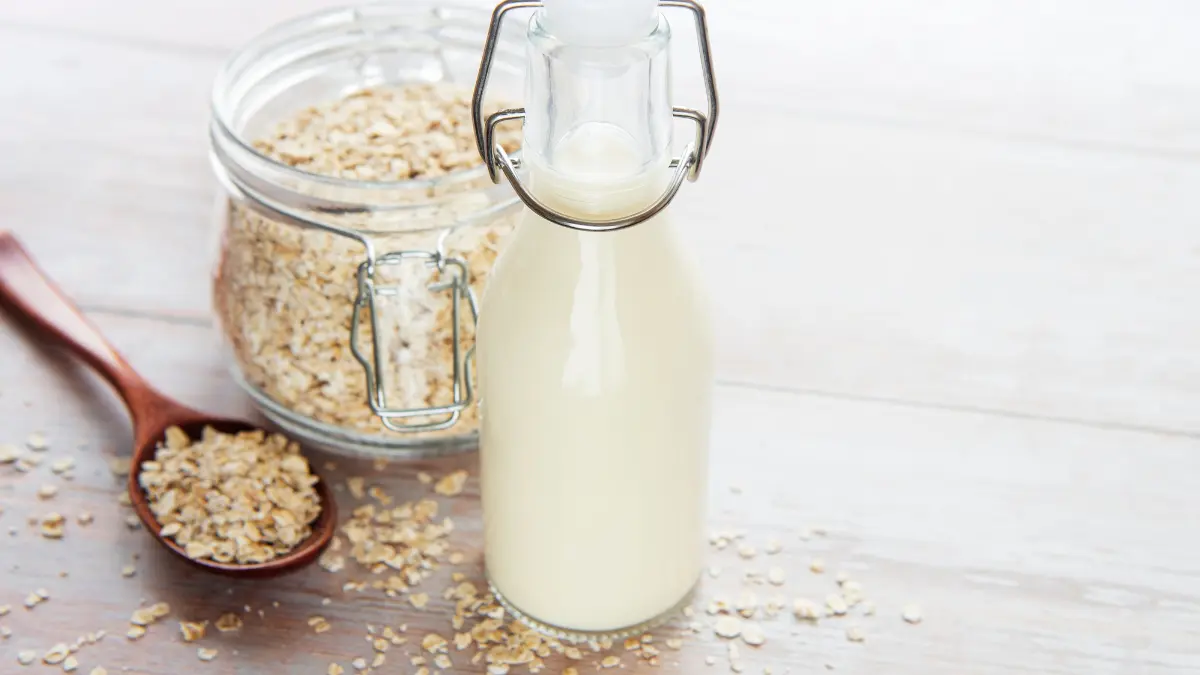
This is the part the internet loves to skip. Dry oats have about 370 to 380 kcal per 100 g. A realistic portion of 40 to 60 g of dry oats brings that down to roughly 150 to 220 kcal, and that's before milk and toppings.
Sounds great until you look at what usually lands on top:
- banana: about 90 kcal
- a tablespoon of peanut butter: about 95 kcal
- a tablespoon of honey: about 60 kcal
- a handful of granola or nuts: about 100 to 150 kcal
Add all that up and your "weight-loss breakfast" easily crosses 500 to 700 kcal. The oats still aren't to blame, but the meal is simply too calorie-dense. Healthy eating that takes you into a calorie surplus is still a surplus. If it helps to track your intake roughly, it's worth knowing how many calories a day you actually need for weight loss.
How to eat oats for weight loss (practical)
A few simple rules that do 90% of the work:
- Choose less processed. Steel-cut oats and whole (large) rolled oats have more intact beta-glucan and a more filling texture than fine instant oats.
- Add protein. Greek yogurt, a little whey, an egg on the side, or a spoon of seeds. Protein plus beta-glucan gives stronger fullness than oats alone.
- Smart toppings. Berries instead of banana with honey, cinnamon for flavor without calories, and measure peanut butter with a spoon, not by eye.
- Keep the portion. For most people, 40 to 60 g of dry oats per meal is plenty.
If you're comparing oats with other morning options, there are good ideas in best grains for weight loss.
Frequently asked questions about oats and weight loss

Are overnight oats good for weight loss?
Yes, but indirectly, and no differently from cooked oats. Overnight oats use the same rolled oats and the same beta-glucan fiber, which increases fullness and helps you eat less across the day. The soaking method doesn't add or remove any weight-loss benefit. What decides the outcome is the type of oats, the portion, and the toppings, not whether they were cooked or left overnight. Without a calorie deficit, no version of oats will take off a gram.
Do overnight oats and cooked oats differ for weight loss?
Calorically and nutritionally they're almost identical. The difference is in convenience and texture, not in the effect on weight. Cooked oats are warmer and many people find them subjectively more filling because of the viscosity, while overnight oats save morning time. What actually decides the result is the type of oats and what you add, not the preparation method.
How do you prepare oats for weight loss?
Use 40 to 60 g of dry oats, add a protein source like Greek yogurt, skyr, or whey, choose a low-calorie topping like berries and cinnamon, and measure any calorie-dense extras like nut butter with a spoon. Whether you cook them or soak them overnight, that formula keeps the jar around 300 to 400 kcal and filling for hours.
How many grams of oats a day for weight loss?
For most people, 40 to 60 g of dry oats per meal. That's roughly 150 to 220 kcal before milk and toppings. There's no magic number, what matters is that the portion fits your daily intake. If you haven't eaten much fiber until now, raise the amount gradually to avoid bloating.
How many calories are in oats?
About 370 to 380 kcal per 100 g of dry oats. A realistic 50 g portion carries roughly 185 kcal. The toppings are what run up the bill: banana around 90 kcal, a tablespoon of peanut butter around 95 kcal, a tablespoon of honey around 60 kcal. A 180 kcal bowl easily becomes a 600 kcal meal.
Which oats are best for weight loss?
Steel-cut oats and whole large rolled oats. They have the most intact beta-glucan and are the most filling. Plain unsweetened instant oats are an acceptable compromise when you're in a hurry, while flavored instant sachets with added sugar are the worst choice because they give less fullness per calorie.
Do oats make you gain weight at night?
No. Calories eaten at a particular hour don't cause weight gain, total calorie intake across the day does. Oats in the evening are perfectly fine if they fit your daily calories. The idea of "forbidden carbs after 6 pm" is a myth. This is also why overnight oats prepped at night and eaten in the morning carry no penalty.
Do oats reduce belly fat?
Not in a targeted way. No food melts fat specifically at the belly. Oats help indirectly, through fullness and better-quality meals, and fat is lost evenly from the whole body through a deficit and movement. A meta-analysis of whole grains found a reduction in waist circumference of about 1.2 cm compared with control, which is a real but modest effect.
Do oats raise blood sugar?
Less than most other carbohydrate breakfasts. Beta-glucan slows digestion and softens the sugar spike, and a meta-analysis showed a reduction in the glucose response of about 23%. EFSA recognises the effect at around 4 g of beta-glucan per 30 g of carbohydrate in a meal. If you have diabetes or insulin resistance, agree the portion and type of oats with your doctor or nutritionist.
Conclusion: oats are an ally, not a magic wand
Oats, cooked or overnight, are one of the smartest breakfasts for weight loss because they genuinely make the hardest part easier: staying full and eating less across the day. On top of that you get lower cholesterol and a steadier blood sugar for free. But all of it rests on three things: the deficit, the type of oats, and the portion. Without those, oats are just another bowl of calories, however healthy.
The overnight version wins on convenience, not on any special fat-loss power. If a jar you can grab from the fridge is what gets you eating a proper breakfast instead of skipping it or grabbing a pastry, that's a real advantage, just a practical one rather than a metabolic one.
Recommended reading
If you want to put the whole picture together, here are related pieces from the blog:
- Best grains for weight loss
- Fast weight loss tips
- Weight loss motivation
- Is running good for weight loss?
- Aerobic weight loss workout
- Cayenne pepper for weight loss
- Is olive oil and lemon good for weight loss?
- Is dark chocolate good for weight loss?


