





.svg)

Dark chocolate often comes up as a healthier treat that might help with weight loss. It's rich in cocoa and has less sugar than milk chocolate, so the question naturally follows: can dark chocolate actually speed up weight loss or curb appetite?
Below, I go through what the science says, from meta-analyses and clinical studies to the nutrition facts, to clear up what role dark chocolate really plays in a weight-loss diet.
Key takeaways on dark chocolate and weight loss
- Dark chocolate doesn't melt fat on its own. Just adding it to your diet without changing anything else won't produce visible weight loss.
- Any effect on weight is small. At best we're talking about very modest shifts on the scale, and only as part of a well-built diet.
- The most useful effect is on appetite and cravings. Dark chocolate can satisfy more than milk chocolate and help you eat fewer other sweets and snacks through the day.
- Nutritionally it's a better choice than typical sweets. Quality dark chocolate brings fiber, minerals, and antioxidants, so it beats most processed candy, in a small amount.
- Not every "dark" chocolate is actually good for you. Baking chocolate often has as much or more sugar than milk chocolate, so it shouldn't be treated as a health food by default.
- There's also the heavy-metals issue. Cocoa can contain traces of lead and cadmium, so it makes sense not to overdo the amount and to choose trusted brands.
- Chocolate is an addition, not the base of a strict weight-loss diet. It can be a small ally, but results still depend on a calorie deficit, plus your overall diet and training.
What the science says: Does dark chocolate help with weight loss?

If we look for the strongest evidence (meta-analyses and large RCTs) on dark chocolate's effect on body weight, the picture is fairly modest.
Unlike many folk remedies, dark chocolate has actually been studied a good deal, mostly for its cardiovascular and metabolic effects rather than directly for weight loss.
When you look at the quality studies, the picture is down-to-earth. A 2019 meta-analysis of 35 RCTs found that cocoa or dark chocolate supplementation did not lead to a significant drop in body weight, BMI, or waist circumference compared with control.
In other words, people taking cocoa or dark chocolate didn't lose more weight than those who didn't, at least not to a degree that would be clinically meaningful. The authors concluded that there's currently no evidence dark chocolate seriously affects measures like weight and BMI.
Is there any effect at all, or none?
A more recent 2024 meta-analysis that looked specifically at people with overweight and obesity found a small but statistically significant effect.
On average, people lost about 0.3 kg more after a cocoa or dark chocolate intervention compared with control, with a slight reduction in BMI and waist circumference.
The best results appeared at doses up to 20 g of dark chocolate a day and interventions longer than 4 weeks. Doses above 20 g a day were not better, probably because the extra calories eat up any potential benefit.
Why is chocolate linked to health, but not necessarily to weight?
Part of the confusion comes from the fact that chocolate is often studied for blood pressure, cholesterol, and cardiovascular risk, not primarily for weight loss. In some studies, the flavanols in cocoa show a positive effect on blood pressure and blood vessel function.
The fact that something helps the heart doesn't automatically mean it melts body fat.
So media headlines about a "chocolate diet" should be taken with a large grain of salt. There have even been deliberate hoax studies that ended up in the media purely to show how easily clickbait spreads in this particular story.
The realistic conclusion on dark chocolate and weight loss
Dark chocolate isn't a miracle weight-loss tool.
The best evidence says its effect on body weight is very small. It can certainly be a small help within a weight-loss meal or as an addition to breakfast, but not the base of a diet.
In small amounts, alongside a good eating plan and movement, dark chocolate can make it easier to stick with the plan (fullness, fewer cravings), but it doesn't replace a calorie deficit.
Other health benefits of dark chocolate
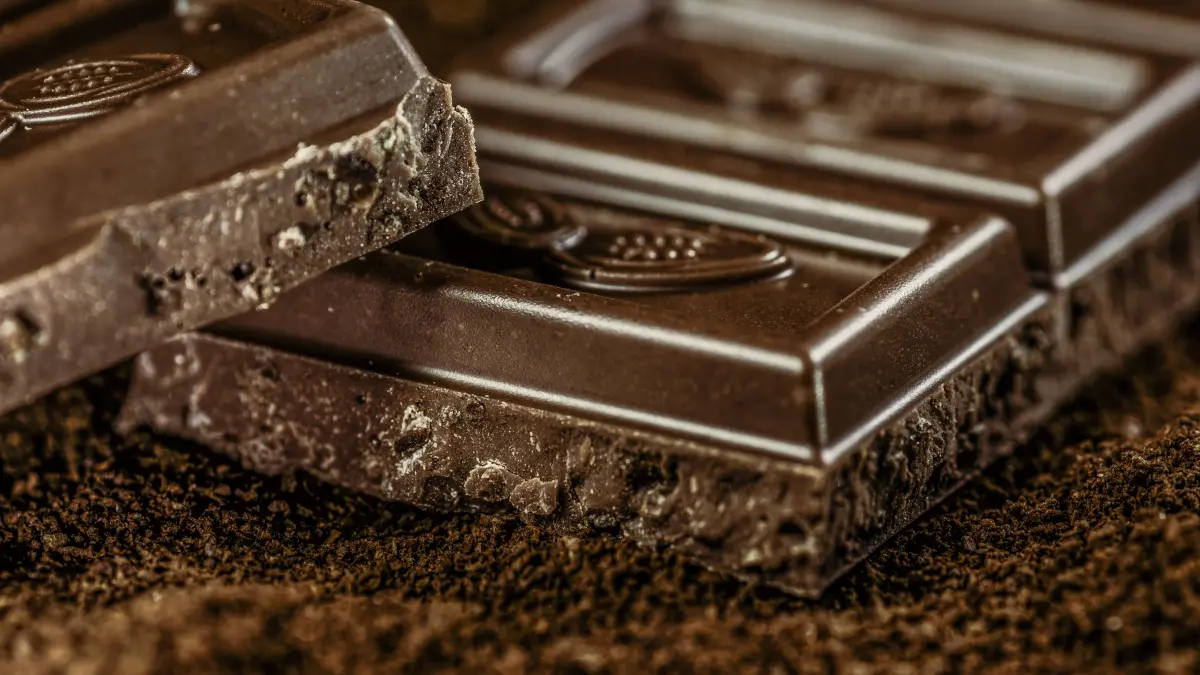
Dark chocolate isn't just a "fit dessert." It has a few real health benefits, but only if it's good quality and eaten in moderation.
- Antioxidant activity. Cocoa is rich in polyphenols and flavanols that help reduce oxidative stress in the body and may support the body against chronic inflammation.
- Heart support. The flavanols in cocoa can improve blood vessel function and slightly lower blood pressure, which over the long term can be a plus for cardiovascular health.
- A nutritionally better sweet. Dark chocolate with a high cocoa content brings magnesium, iron, and other minerals, so it's a better choice than typical sweets that are practically just sugar and oil.
- An effect on mood. Cocoa encourages the release of serotonin and endorphins, so a small amount of dark chocolate can help you feel less deprived on a diet and stick with the plan more easily.
- Possible support during training. In some people, a small amount of cocoa or dark chocolate before a workout gives a mild energy boost and a subjectively better session, though it's no magic pre-workout.
Testing has shown that some dark chocolates can contain elevated traces of lead and cadmium, so it makes sense not to overdo the amount and to choose trusted brands.
Chocolate quality: sugar, cocoa content, and heavy metals
Many people think every dark chocolate is automatically healthy. Here's what to watch for.

Cocoa content and sugar in dark chocolate
When it comes to dark chocolate and weight loss, the first thing worth looking at is the ratio of cocoa to sugar.
Real dark chocolate has a high proportion of cocoa components (cocoa mass and cocoa butter) and relatively little sugar.
The general recommendation is to choose chocolate with at least 70% cocoa.
The higher the cocoa percentage, the less sugar there usually is. The problem comes with baking chocolates that "sound" healthy but aren't by composition.
For example, a typical store-brand dark baking chocolate can carry around 45 to 50 g of sugar per 100 g, which is close to what many milk chocolates have (Hershey's Milk Chocolate is roughly 51 g of sugar per 100 g).
That kind of industrial "dark" chocolate isn't really better than milk chocolate, it just has less milk.
So it's important to read the label rather than trust the color of the wrapper.
Added fats in dark chocolate
Quality dark chocolate shouldn't contain much more than cocoa components, sugar, a little lecitin, and maybe natural vanilla flavor.
In pricier chocolates, all the fat comes from cocoa butter. In cheaper versions you'll often find added vegetable fats like palm oil or shea butter.
That doesn't make the chocolate toxic, but it tells you the manufacturer skimped on cocoa butter.
If you see a long list of oils and fats on the label, that isn't the type of dark chocolate you want to use as a "better" option in your diet.
Heavy metals in cocoa
Cocoa is a plant that can draw traces of metals like cadmium and lead from the soil. Testing of dark chocolate has shown that some products carry levels of these metals higher than experts would like to see for everyday consumption.
In its investigation of 28 dark chocolate bars, Consumer Reports detected cadmium and lead in all of them. For 23 of the bars, eating about an ounce a day would put an adult over the level its experts consider potentially harmful.
Consumer Reports even called on manufacturers to reduce them.
This doesn't mean you should panic over a single square. A moderate amount (a couple of squares here and there) won't be a problem for most healthy adults.
But it's smart not to overdo the quantity, to rotate brands, and to be especially careful during pregnancy and with children. An organic label doesn't solve this, because the issue is tied to the soil, not pesticides.
Taste and enjoyment
In the end, chocolate is still chocolate. If you buy 90% cocoa chocolate "because it's healthier," and it's so bitter that you end up eating it with half a pack of biscuits, you haven't gained much.
For most people it's far smarter to find a 70% or 75% chocolate that genuinely suits their palate.
That way you're satisfied with a square or two, instead of constantly hunting for "something else sweet." The goal is a balance between quality and enjoyment. Good dark chocolate is the kind you can fit into your day with a clear conscience.
The best dark chocolate for weight loss: What to look for

If you want a quick checklist for picking a bar, here's what a good dark chocolate for weight loss looks like:
- At least 70% cocoa. Higher cocoa usually means less sugar and more satisfaction per square. If 85% or 90% is too bitter for you, don't force it, a 70% you'll actually eat in moderation is better than a 90% you binge.
- A short ingredient list. Ideally just cocoa mass, cocoa butter, a little sugar, and maybe lecithin or vanilla. Skip bars with a long list of added oils.
- Cocoa butter, not palm oil or shea. If the fat comes from cocoa butter alone, you're getting the real thing. Added vegetable fats signal a cheaper product.
- Low sugar per 100 g. Compare the "of which sugars" line. A genuine 70%-plus bar is usually well below a milk chocolate's sugar level.
- A brand you can rotate. Given the heavy-metals findings, don't eat the same bar every single day. Vary trusted brands, and keep portions to a square or two.
The point isn't a single "best" bar. It's the combination of high cocoa, a clean label, and a portion you can actually keep small.
How to eat dark chocolate on a weight-loss plan
Once you've decided to include dark chocolate in your eating plan, here are a few practical tips to get the benefits and minimize the downsides.
1. Limit the portion
Dark chocolate is still energy-dense. A good measure is about 10 to 20 grams a day, roughly one to two squares. That's enough to taste it, calm a sweet craving, and take in about 50 to 100 kcal. A whole 100 g bar already runs over 500 kcal, and that's where the idea of weight loss melts faster than the fat. If you know it's hard to stop at two squares, it can help not to keep large bars at home, or to buy smaller ones.
2. Choose good timing
Many people do best with one small square after a meal. That gives you the feeling of having a dessert and lowers the chance you'll go digging through the cupboards later. Others like dark chocolate in the afternoon, when energy and focus dip. Some eat it before a workout as a small boost. All of those are fine. Just larger amounts late at night aren't ideal, especially if you're sensitive to caffeine or food before bed gives you heartburn.
3. Pair it with other foods
If dark chocolate is a bit too intense on its own, you can soften it nicely. Melt a square and dip strawberries, chop it into Greek yogurt with a little fruit, or have it with coffee or tea. Very little chocolate is enough to make a dessert satisfying, especially paired with something you already love. That way you don't need a large amount to feel like you're having a real dessert.
4. Use it as a flavor, not the main star
You don't have to eat only chocolate. Unsweetened cocoa powder is essentially de-fatted chocolate and it's excellent stirred into oatmeal, a smoothie, breakfast, or a homemade protein shake. A few grams of grated dark chocolate over oat-flour pancakes or in a bowl of oats gives the impression of a rich chocolate dessert while staying very modest on calories. Your brain gets the chocolate experience, and your body doesn't get too many calories.
5. Pay attention to your triggers
In some people, a small square of chocolate calms a sweet craving. In others, it opens the appetite for even more sweets. If you notice that one square regularly leads you to biscuits, ice cream, and everything else in the kitchen, dark chocolate might not be the best tool during a phase of active weight loss. In that case it's smart to wait until you've built better control over portions and habits. For some people chocolate is a release valve that saves the diet, and for others it's a Pandora's box that wrecks it. It's worth being honest about which group you're in.
6. Connect chocolate with water and protein
When you eat something sweet, including dark chocolate, it's good to have a glass of water or an unsweetened drink with it. That fills the stomach a bit more and boosts the feeling of fullness. An even better option is to work chocolate into a snack that contains protein and fiber. An example is a few squares of dark chocolate with a handful of almonds. That way you get protein, healthy fats, and fiber from the almonds, plus antioxidants from the cocoa. That combination satisfies far better than chocolate alone and fits much more nicely into a weight-loss plan.
Dark chocolate: a small ally, not a weight-loss miracle
The real role of dark chocolate is to make it easier to stick with a healthy diet. It offers enjoyment and fullness, has relatively little sugar (if it's good quality), and brings useful antioxidants.
The foundation of weight loss stays the same: a calorie deficit. The point is to expend more energy than you take in. Dark chocolate can give you a psychological tailwind and minimal physiological advantages in that process, but it won't lose the weight for you.
Recommended reading
For more in the same myth-busting style:
- Is olive oil and lemon good for weight loss?
- Best grains for weight loss
- Is running good for weight loss?
- Cayenne pepper for weight loss
Frequently asked questions about dark chocolate for weight loss

Does dark chocolate help with weight loss?
Dark chocolate can only help indirectly, and it doesn't melt body fat on its own. If a small amount of dark chocolate reduces your craving for other sweets and helps you stay in a calorie deficit, it can make sense in an eating plan. If you just add it to your existing diet, it won't help with weight loss.
Does dark chocolate burn fat?
No, dark chocolate doesn't burn fat. Body fat is lost when you take in fewer calories than you expend over time. Dark chocolate can be a better choice than many processed sweets, but it still has calories, sugar, and fat. So the portion has to be small and fit into the rest of your day.
How much dark chocolate should you eat on a diet?
A good measure is about 10 to 20 grams a day, roughly one to two squares, depending on the chocolate. That's enough to taste it and calm a sweet craving without a big calorie load. A whole 100 gram bar can easily have more than 500 calories.
Is dark chocolate better than milk chocolate for weight loss?
Generally yes, if it has a high cocoa content and less sugar. Dark chocolate can be more filling, more intense in flavor, and nutritionally better than milk chocolate. Still, not every dark chocolate is automatically a good choice. Some baking chocolates have a lot of sugar and aren't significantly better than ordinary sweets.
What percentage of cocoa is best for weight loss?
It's best to choose dark chocolate with at least 70% cocoa. That kind of chocolate usually has less sugar and a more intense flavor, so it's easier to stop at a smaller amount. If 85% or 90% cocoa is too bitter for you, there's no need to force it. Better to pick a chocolate you can genuinely eat in moderation.
Can dark chocolate reduce appetite?
In some people it can. Dark chocolate is intense, richer, and more aromatic than ordinary sweets, so a small amount can calm a craving for something sweet. In other people, though, one square opens the desire for even more food. So it's important to honestly track whether chocolate helps you control your appetite or wrecks your plan.
When is the best time to eat dark chocolate on a diet?
Many people do best with it after a meal, as a small dessert. There's less chance you'll overeat because you're already full. Some prefer it in the afternoon with coffee or tea, when energy dips. It's important to avoid snacking straight from a large bar, because that's how the portion easily slips out of control.
Is dark chocolate healthy?
Quality dark chocolate can have health benefits, because cocoa contains flavanols, polyphenols, minerals, and antioxidants. It can be a better choice than most typical sweets, but it still isn't a food to eat without limits. The health benefit comes from a small amount of quality chocolate, not from half a bar a day.
What should you watch for when buying dark chocolate?
First look at the cocoa content and the amount of sugar. A good choice is chocolate with at least 70% cocoa and a short ingredient list: cocoa mass, cocoa butter, a little sugar, and maybe lecithin or vanilla. If you see a lot of added vegetable fats, a lot of sugar, or a long ingredient list, that isn't the best option for your diet.
Is baking chocolate good for weight loss?
Not necessarily. Baking chocolate often sounds "dark" and serious, but it can have a lot of sugar and added fats. Some have a sugar amount very similar to milk chocolate. So you shouldn't go by the name or color of the chocolate alone, but by the label and the actual composition.
Does dark chocolate contain heavy metals?
Cocoa can contain traces of cadmium and lead, because the plant can draw these metals from the soil. That doesn't mean you should panic over a few squares, but it makes sense not to overdo it, to rotate brands, and to choose trusted producers. Extra caution makes sense for children and pregnant women.
How do you fit dark chocolate into a weight-loss diet?
It's best used as a small addition, not as a main food. You can eat one to two squares after a meal, grate a little dark chocolate into oatmeal, add it to Greek yogurt with fruit, or use unsweetened cocoa powder for a chocolate flavor. That way you get the enjoyment without a big calorie hit.
What's the bottom line on dark chocolate for weight loss?
Dark chocolate isn't a weight-loss miracle, but it can be a small ally if it helps you control your craving for sweets. The most important things are to choose quality dark chocolate, stick to a small portion, and fit it into a calorie deficit. The results won't come from the chocolate itself, but from your overall diet, training, and consistency.


